Touchscreen Response Times Define Decision Frames Across Mobile Roulette Variants
Logan Schwarz · Aug 22, 2026
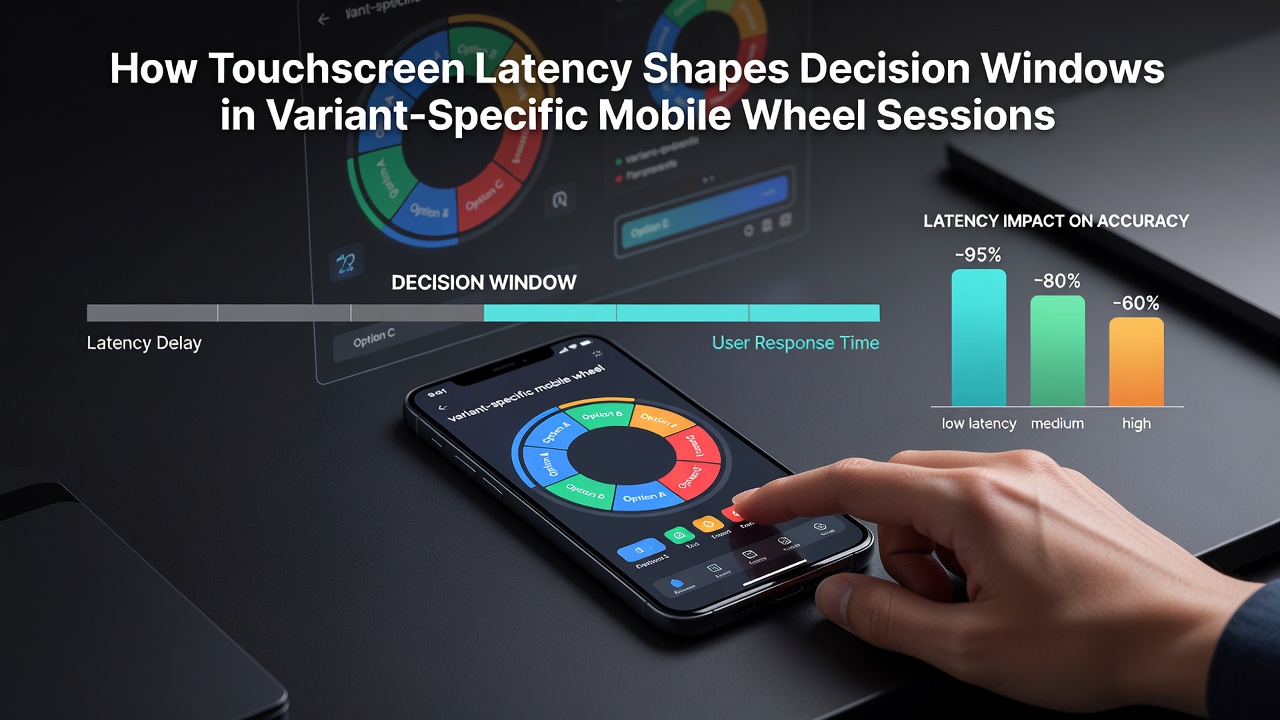
Touchscreen Response Times Define Decision Frames Across Mobile Roulette Variants
Device manufacturers measure touchscreen latency in milliseconds, and these figures directly influence how long players have to register bets in European, American, and French roulette variants on smartphones. Research from human-computer interaction laboratories shows average finger-to-screen delays range between 30 and 90 milliseconds depending on hardware, operating system version, and application rendering pipeline. Data collected across multiple device models indicates that higher latency compresses the effective decision window once the wheel begins its final rotation phase.
Technical Measurement of Latency in Mobile Wheel Sessions
Engineers define input latency as teh interval between physical contact and visual confirmation on screen, while output latency covers the time required for the game engine to update the betting grid or wheel state. Studies conducted at technical universities in Germany and Australia demonstrate that combined input-output delays in gaming applications often exceed 120 milliseconds on mid-range devices released before 2024. Observers note that variant-specific rules alter the available reaction period because European roulette offers a single zero whereas American wheels include both zero and double zero, changing the total number of betting options displayed simultaneously.
Variant Differences in Decision Timing
European roulette sessions on mobile require players to place bets within a fixed interval that begins when the croupier announces "no more bets" in live dealer streams. Latency reduces this interval by the same fixed amount across all devices, yet the effect becomes more pronounced when the application must render additional chips or animated wheel segments. American variants display extra betting positions, increasing graphical load and extending rendering time on older hardware. French roulette incorporates la partage and en prison rules that trigger additional on-screen prompts, further extending the processing queue before the wheel animation starts.
Industry reports from the Canadian Gaming Association highlight that operators track average session completion rates on different device tiers, revealing measurable drops when latency surpasses 80 milliseconds during the final betting stage. Those who have analyzed application telemetry note that players using flagship phones from 2025 maintain higher completion percentages compared with users on budget models from the same period.
Impact on Player Interaction Patterns
Touchscreen latency affects not only the total decision window but also the sequence of micro-actions required to adjust bet sizes or move chips across the layout. Researchers at institutions in Japan and the Netherlands have recorded that repeated tap-and-drag gestures accumulate additional delay when the application processes each input separately rather than buffering multiple touches. Variant-specific interfaces compound this issue because American roulette layouts contain more inside bet options, requiring finer touch precision within the shortened timeframe.

Application developers have responded by implementing predictive rendering techniques that preload wheel animation frames and betting confirmations. Data from controlled tests conducted in 2025 indicate these optimizations recover between 15 and 25 milliseconds on average across tested variants. European sessions benefit most from such adjustments because their simpler zero structure reduces the number of conditional checks the engine must perform before accepting the final bet.
Hardware and Software Variables
Operating system updates released in early 2026 introduced improved touch sampling rates on several Android flagships, reducing measured latency by up to 40 percent in gaming benchmarks. iOS devices maintained more consistent performance across the same period, according to comparative analyses published by independent testing facilities. Observers note that players switching between European and American variants on the same device often experience different effective decision windows because the application must load distinct rule sets and payout tables.
Academic papers on mobile human factors emphasize that individual reaction times average 200 to 250 milliseconds for simple visual stimuli, leaving limited margin once system latency consumes part of the interval. When multiple variants run simultaneously in separate application windows, background processes can further increase delay and narrow the remaining window for accurate input registration.
Regulatory and Industry Context in August 2026
By August 2026 several testing laboratories in the European Union and Singapore began requiring latency disclosure for mobile gaming applications submitted for certification. These requirements focus on documenting maximum input-to-output delays under standardized network conditions rather than mandating specific thresholds. Operators report that compliance documentation now includes variant-specific test cases covering European, American, and French roulette interfaces on representative device samples.
Trade publications covering interactive entertainment note that developers increasingly publish device compatibility matrices listing measured latency ranges alongside recommended graphics settings. Such matrices allow users to select configurations that preserve adequate decision windows across different wheel variants.
Conclusion
Touchscreen latency directly reduces the time available for bet placement in mobile roulette sessions, with the reduction scaled by the complexity of each variant's rules and interface elements. European, American, and French versions exhibit distinct sensitivities because they differ in the number of betting positions, conditional prompts, and animation sequences. Measurements from multiple research and testing sources confirm that hardware improvements and software optimizations can partially offset these effects, yet the relationship between system delay and decision windows remains consistent across device categories. Continued monitoring of latency metrics alongside variant-specific session data provides the factual basis for understanding performance differences in mobile wheel applications.