Mobile Interfaces: Distinguishing Roulette Variants to Aid Strategic Gameplay
Devon Schmitz · Jun 8, 2026

Mobile Interfaces: Distinguishing Roulette Variants to Aid Strategic Gameplay
Players encounter multiple roulette variants on mobile platforms, and interfaces present these options through structured visuals that separate wheel layouts, betting grids, and payout structures. European roulette features a single zero while American versions add a double zero, and mobile screens use color-coded sections along with expandable rule panels to mark these distinctions without requiring external references. French roulette incorporates la partage and en prison rules that return half the stake on even-money bets when zero appears, and app developers integrate toggle switches that activate these modifiers during practice sessions so users observe their impact on expected returns over repeated spins.
Visual Layouts That Separate Game Mechanics
Designers arrange variant selectors at the top of mobile screens while keeping the wheel and table visible below, allowing direct comparisons as users switch between modes. Touch gestures expand side panels that list house edges for each type, with European at 2.70 percent and American at 5.26 percent according to figures released by the Nevada Gaming Control Board in its 2025 annual review. Interactive wheels rotate at adjustable speeds, and tapping specific pockets triggers pop-up explanations of adjacent number sequences, which helps clarify why certain betting patterns perform differently across variants. Data from mobile analytics firms shows that sessions incorporating these visual aids extend by an average of 12 minutes compared to static displays, since players spend additional time testing rule variations before committing funds.
June 2026 brought updates to several regulated platforms that added overlay grids highlighting the five-number bet unique to American roulette, a wager carrying a 7.89 percent house edge. These overlays appear only when that variant loads, and they fade once the player selects a different wheel, reducing confusion during rapid switches between games. Observers note that such contextual elements align with accessibility standards adopted by multiple jurisdictions, ensuring text remains legible on smaller displays without altering core gameplay speed.
Strategic Tools Embedded in Mobile Displays
Calculators integrated into mobile interfaces compute potential payouts for selected bets across variants, displaying results side by side so differences become immediately apparent. Users input stake amounts and the software applies variant-specific multipliers while factoring in rules like en prison, which alters outcomes on zero spins. Researchers at the University of Nevada, Las Vegas documented in a 2024 study that participants using in-app calculators achieved 18 percent higher accuracy when predicting long-term returns compared to those relying on mental math alone.
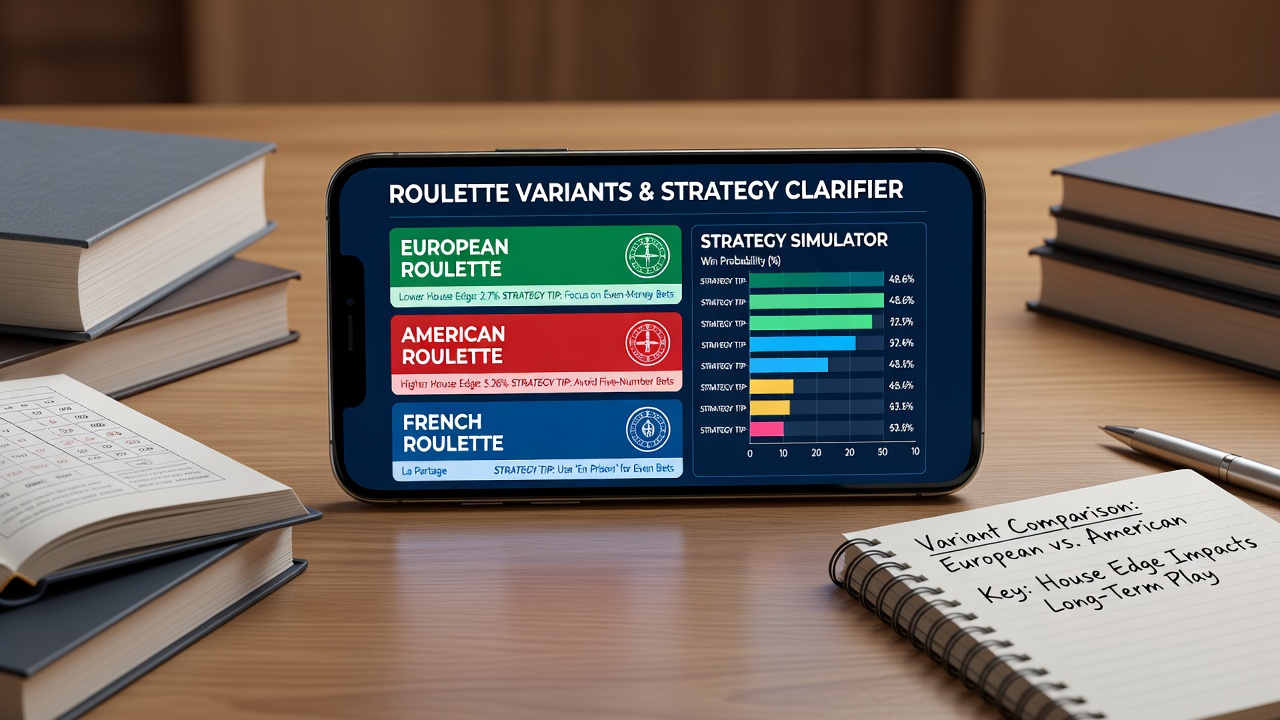
History logs record previous outcomes with filters that isolate results by variant, enabling pattern review tailored to each wheel configuration. Mobile developers link these logs to probability simulators that run thousands of virtual spins in the background, presenting aggregated data on win frequencies for inside versus outside bets. Such features operate within the constraints of random number generators certified by independent testing labs, and they present variance ranges rather than guaranteed sequences. Industry reports from the Massachusetts Gaming Commission indicate that certified simulators on mobile platforms processed over 4.2 million practice spins across user accounts in the first quarter of 2026, reflecting widespread adoption of these analytical tools.
Adaptations for Different Screen Sizes and User Preferences
Responsive design adjusts button spacing and font scaling so that rule explanations remain accessible whether the device holds in portrait or landscape orientation. Portrait mode stacks variant information vertically beneath the wheel while landscape spreads comparison charts across the wider view, and both orientations maintain consistent data accuracy. Customization menus allow players to highlight preferred betting zones or dim less relevant sections, which streamlines focus during extended sessions without changing underlying probabilities. Those who study interface usage patterns report that players who adjust these settings complete more variant trials before selecting a primary game, since the options encourage systematic exploration rather than random selection.
Conclusion
Mobile interfaces organize roulette variants through layered visuals, embedded calculators, and filtered history tools that present mechanical differences in concrete terms. These elements operate alongside certified random processes and regulatory standards from multiple regions, supplying players with clear data on house edges, rule modifiers, and payout structures. Continued refinements in June 2026 and beyond maintain alignment with evolving device capabilities while preserving the factual separation of each variant's characteristics.